
"export price"
7000 article(s) found

Acidity and texture introduction to the characteristics of Coffee Flavor Manor in Xidamo Shaqiso producing area
In Ethiopia, the grading and quality control system of coffee is divided into three levels: producer, regional and national. All coffee is inspected by local inspection agencies before leaving the country of origin, and then re-tested at the coffee inspection and grading centers in Addis and Diredawa to determine its quality grade. Coffee is graded before auction and sale, for all involved in production, acquisition,

Ethiopian fine coffee with intense nutty aromas Taste Introduction
Coffee is Ethiopia's most important export cash crop and the main source of foreign exchange earnings. Ethiopia's coffee exports account for about 3% of the world market share, making it the eighth largest coffee exporter in the world. Coffee exports increased steadily from 58,000 tons in 1990-1991 to 110,000 tons in 1995 - 1996 and remained at that level for the next few years. 2001 - 2002

Introduction to the characteristic species of Colombian Coffee beans Lazmus Manor
In the early 1960s, coffee production was about 600kg per hectare. Now it has risen to about 900kg, and some farms can reach 2500 kg. However, quality assurance is a top priority for the coffee industry. Colombia established the National Coffee Management Association (Federacion Nacional de Cafeteros, or FNC) in 1927, which is responsible for quality supervision. Although the association is a private company

Ethiopian Limu Coffee introduces the Manor of Coffee producing area
Coffee is Ethiopia's most important export cash crop and the main source of Ethiopia's foreign exchange earnings. Ethiopia's coffee exports account for about 3% of the world market, making it the eighth largest coffee exporter in the world. Coffee exports increased steadily from 58000 tons in 1990 to 110000 tons in 1995-1996 and remained at this level in the following years. 2001-2002

August 2 Coffee prices quoted on exchanges at home and abroad
International Coffee ICE Intercontinental Exchange Coffee Index (raw beans) 141.75 cents / lb, equivalent to RMB quotation of about 20.984 yuan / kg up and down-0.25% compared with the previous trading day: coffee 09 contract (raw beans) 138.65 cents / lb, equivalent to RMB quotation of about 20.525 yuan / kg-0.25% Note: coffee 09 contract represents 2017

Introduction to the characteristics of flavor and taste of Ethiopian coffee manor with acidity and texture
Due to different processing methods, coffee can be divided into washed coffee (Washed coffee) and sun-cured coffee (Sun-dried coffee). Washed coffee accounts for 35% of exports. Good quality washed coffee is processed with freshly picked fully ripe fruit, picked carefully and closely monitored by professionals. The clean coffee beans picked up will be pulped on the day of picking.

Introduction to the characteristics of the manor producing area with strong flavor of Ethiopian coffee
In Ethiopia, the grading and quality control system of coffee is divided into three levels: producer, regional and national. All coffee is inspected by local inspection agencies before leaving the country of origin, and then re-tested at the coffee inspection and grading centers in Addis and Diredawa to determine its quality grade. Coffee is graded before auction and sale, for all involved in production, acquisition,

Variety introduction of taste treatment method for manor flavor description in Sidamo coffee producing area of Ethiopia
Variety introduction Coffee is the most important export cash crop of Ethiopia and the main source of foreign exchange income of Ethiopia. Ethiopia's coffee exports account for about 3% of the world market, making it the eighth largest coffee exporter in the world. Coffee exports increased steadily from 58000 tons in 1990 to 1995-1996.

Vietnam thinks coffee exports will be better than expected this year.
According to Vietnam, "material prices and markets"
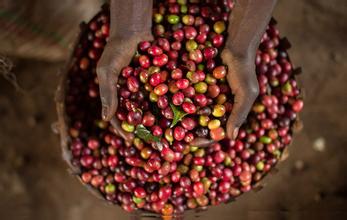
Boutique coffee beans Ethiopian coffee the latest coffee introduction unique flavor
Coffee is Ethiopia's most important export cash crop and the main source of Ethiopia's foreign exchange earnings. Ethiopia's coffee exports account for about 3% of the world market, making it the eighth largest coffee exporter in the world. Coffee exports increased steadily from 58000 tons in 1990 to 110000 tons in 1995-1996 and remained at this level in the following years. 2001-2002

A brief introduction to the producing area of boutique coffee in the world: the rise of Kenya
Internationally, the increase in the number of Kenyan coffee is obvious. From 1969 to 1970, 800000 bags were exported, and from 1985 to 1986, exports increased to 2 million bags. Now the yield is stable at 1.6 million bags, with an average yield of about 650kg per hectare. Even before coffee prices skyrocketed in recent years, the average price of coffee in Kenya had been rising. Price from 1993 to 1994

The growing environment of coffee trees in Ethiopia introduces Ted Manor
Coffee is Ethiopia's most important export cash crop and the main source of Ethiopia's foreign exchange earnings. Ethiopia's coffee exports account for about 3% of the world market, making it the eighth largest coffee exporter in the world. Coffee exports increased steadily from 58000 tons in 1990 to 110000 tons in 1995-1996 and remained at this level in the following years. 2001-2002

Ethiopian coffee bean producing area of Ethiopian coffee bean flavor manor
Coffee is Ethiopia's most important export cash crop and the main source of Ethiopia's foreign exchange earnings. Ethiopia's coffee exports account for about 3% of the world market, making it the eighth largest coffee exporter in the world. Coffee exports increased steadily from 58000 tons in 1990 to 110000 tons in 1995-1996 and remained at this level in the following years. 2001-2002

Introduction to the production area of Ethiopian Coffee Flavor Manor which is divided into washing treatment
Due to different processing methods, coffee can be divided into washed coffee (Washed coffee) and sun-cured coffee (Sun-dried coffee). Washed coffee accounts for 35% of exports. Good quality washed coffee is processed with freshly picked fully ripe fruit, picked carefully and closely monitored by professionals. The clean coffee beans picked up will be pulped on the day of picking.

Introduction to the flavor and taste of Ethiopian boutique coffee beans
Coffee is Ethiopia's most important export cash crop and the main source of Ethiopia's foreign exchange earnings. Ethiopia's coffee exports account for about 3% of the world market, making it the eighth largest coffee exporter in the world. Coffee exports increased steadily from 58000 tons in 1990 to 110000 tons in 1995-1996 and remained at this level in the following years. 2001-2002

Introduction to the description of Grinding scale Flavor of Coffee Variety produced by Coffee Farm in Ethiopia
Coffee is Ethiopia's most important export cash crop and the main source of Ethiopia's foreign exchange earnings. Ethiopia's coffee exports account for about 3% of the world market, making it the eighth largest coffee exporter in the world. Coffee exports increased steadily from 58000 tons in 1990 to 110000 tons in 1995-1996 and remained at this level in the following years. 2001-2002

The production of coffee beans in the world's major coffee exporters
The output of the world's major coffee exporters is on a downward trend due to various factors, while global coffee demand is rising again. Some analysts pointed out that this will lead to an annual increase of about 20% in international coffee bean prices in the next few years. With the discovery and development of new producing areas such as Yunnan, the distribution of coffee producing areas will be more dispersed, which will also be beneficial to the price of this commodity.

Acidity and texture A brief introduction to the characteristics of Coffee Flavor Manor in Xidamo Shaqiso producing area
According to the law, all coffee is sold through an auction held by Addis and DiRedawa. During the coffee harvest, such auctions are even held twice a day. In Ethiopia, the grading and quality control system of coffee is divided into three levels: producer, regional and national. All coffee must be inspected by the local inspection agency before leaving the producing area, and then in Asia.

The market of boutique coffee beans welcomes recovery in 2014
After three consecutive years of decline, coffee bean prices finally took a turn for the better in 2014, but in many coffee bean markets, only boutique coffee beans stand out in a single block, which can maintain a reasonable price and is not affected by the commodity cycle.